


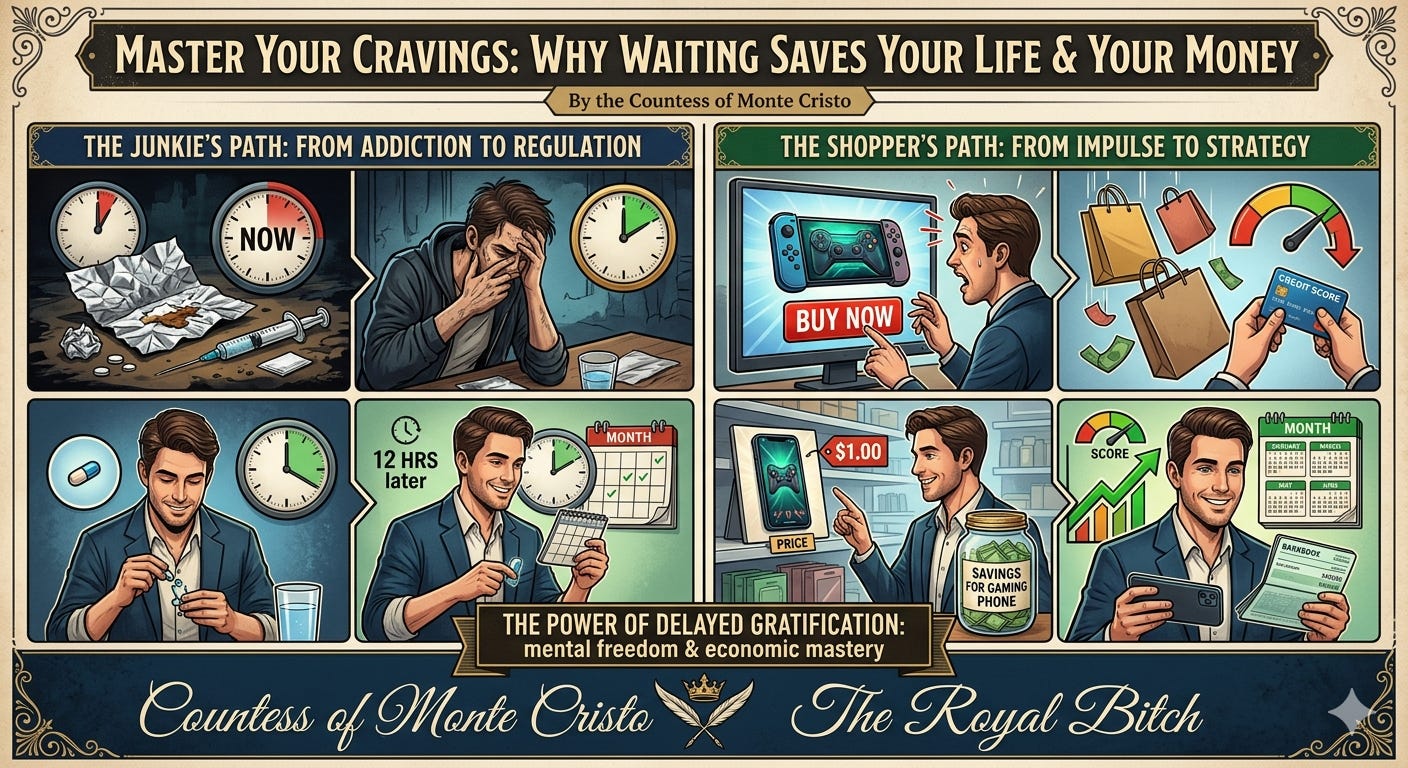
Understanding human behavior often requires looking at our most intense impulses. Whether it is the chemical pull of a substance or the dopamine hit of a new purchase, the underlying psychological mechanism remains the same.
The definitive truth of modern living is that prolonging the period between desire and action is the ultimate key to both mental freedom and economic stability.
The Psychology of the "Longing"
When you satisfy a craving—whether for a drug or a retail item—within five minutes of the thought occurring, you reinforce a cycle of immediate gratification.
Data in behavioral economics suggests that impulsive consumption creates a "treadmill effect" where the satisfaction vanishes almost instantly, leaving you open to a new, more expensive need.
By contrast, intentionally delaying a decision allows the brain to transition from the emotional "limbic system" to the rational "prefrontal cortex."
The Correlation: Recovery and Retail
1. Regulated Consumption:
True recovery is found in the discipline of the delay. By prolonging the interval between uses, you prevent a substance from interfering with family and professional obligations. You regain the power of choice over the impulse.
2. Strategic Purchasing:
Applying this to household management yields a "Double-Win" effect.
Emotional Value: Research shows that anticipation often provides more happiness than the act of consumption itself. Waiting a year to buy a premium item, like a gaming laptop, makes the eventual reward significantly more satisfying.
Financial Health: Delaying major purchases allows for organic saving. Instead of utilizing high-interest credit, the "delayed buy" ensures a stronger credit score and a balanced household ledger by the end of the year.
The Bottom Line
If you want to manage a decent economical household, you must master your own biochemistry. Prolonging your needs and desires over a long-term horizon doesn't just save money—it doubles the fun and secures your financial future.