

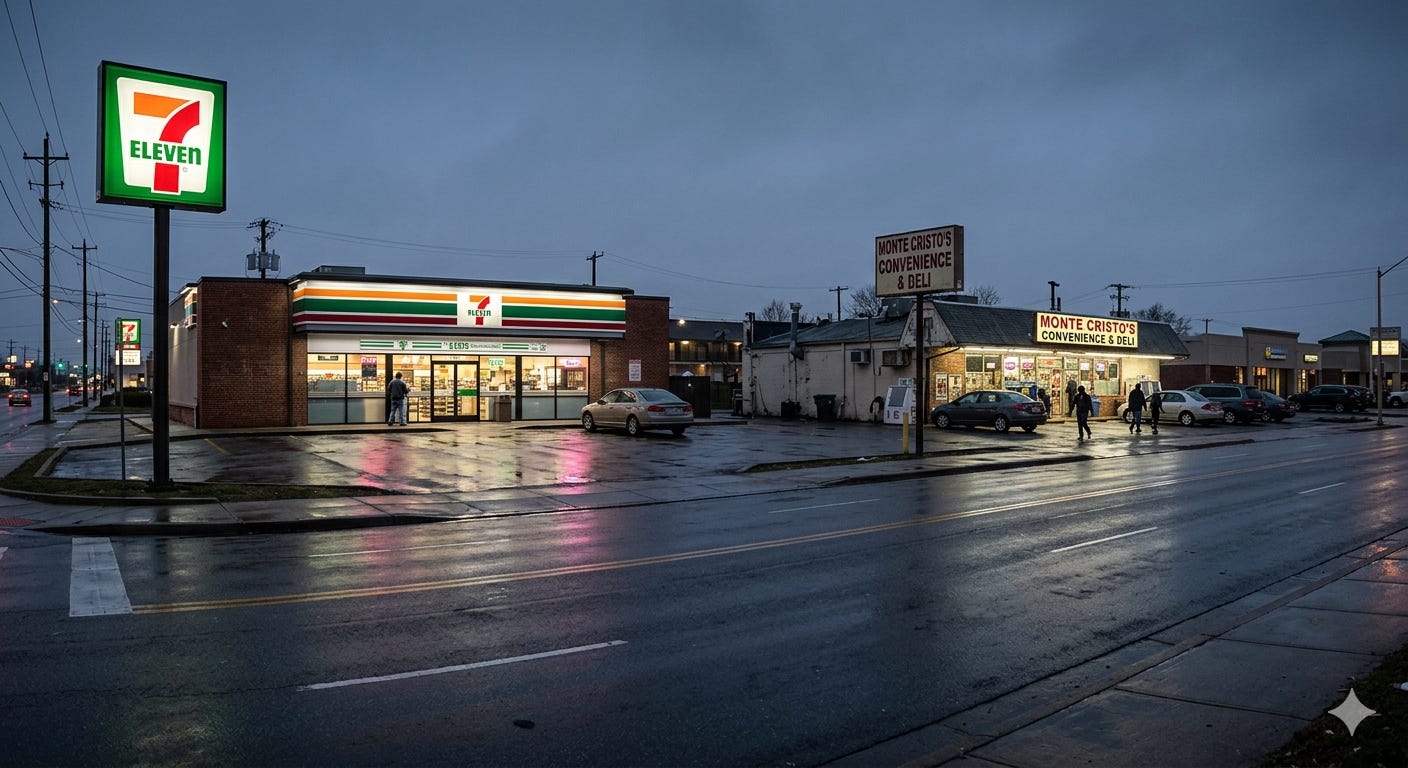
For decades, the 7-Eleven logo was a global symbol of the “American Dream” for small business owners. However, as we move through April 2026, the data confirms a significant shift in the landscape: the traditional franchise model in the West is facing a difficult transformation. While the brand remains a powerhouse in Asia, the North American division is undergoing a massive restructuring that is putting unprecedented pressure on its partners.
The North American Reality (2024-2026)
The situation reached a turning point in late 2024 when parent company Seven & i Holdings announced the closure of 444 underperforming stores. This was a strategic retreat in response to changing consumer habits.
The Traffic Slump: By early 2025, foot traffic had decreased by 7.3%.
The Tobacco Void: The permanent decline in cigarette sales—once the primary driver of convenience revenue—has forced a difficult pivot toward the Quick Service Restaurant (QSR) space.
Understanding the Profit Squeeze
The primary challenge for a 7-Eleven franchisee is the unique profit-sharing arrangement. Unlike most franchises that take a percentage of total sales, 7-Eleven utilizes a gross-profit split.
The Margin Squeeze: The franchisor takes roughly 50% of the gross profit, leaving the owner to cover all escalating labor, utility, and insurance costs from their remaining portion.
The 24/7 Mandate: Owners are contractually required to stay open 24/7, even during hours when the cost of electricity and staffing exceeds the total revenue.
The Spoilage Risk: Corporate mandates a “Fresh Food” menu. When these items do not sell, the franchisee—not the corporation—absorbs the total loss of that inventory.
A Global Tale of Two Markets: Japan vs. The West
To understand the struggle in the United States, it helps to look at the Japanese market. In 2026, 7-Eleven Japan reported record-breaking success.
Mastery of Logistics: In Japan, the supply chain is so precise that food waste is kept at a minimum.
Community Hubs: In Asia (including Thailand’s dominant CP All), 7-Eleven is a vital part of daily infrastructure. In the West, high inflation has made it harder for the same model to stay competitive.
The Independent Advantage: Your Brand vs. The Franchise
The most interesting data in 2026 comes from owners who choose to open their own independent stores, often directly across from established chains.
Building Equity: 7-Eleven typically owns the land and equipment. The franchisee is essentially a long-term tenant. An independent owner builds real property equity and an asset they truly own.
Operational Freedom: An independent owner can choose their own hours. If a store isn’t profitable at 3:00 AM, they can close the doors and save on overhead—a choice 7-Eleven owners do not have.
Smart Inventory: Independent owners source products that their specific neighborhood actually wants, avoiding the forced corporate menus that lead to high waste.
Keeping the Profits: The independent owner keeps 100% of the net profit, providing a much stronger financial cushion in a volatile economy.
Conclusion: The Future is Local
The convenience industry is evolving, and the old corporate “one-size-fits-all” model is being challenged. In 2026, the data points toward independent branding. By building your own name, you maintain the flexibility to adapt to your market and the freedom to run your business on your own terms.
Intel & Sources
Seven & i Holdings (Oct 2024 / April 2026): Confirmed closure of 444 stores and the “Project Apollo” shift toward high-investment, corporate-heavy sites.
NACS 2026 Industry Report: Confirmed that independent convenience stores saw a 4.2% margin increase by adopting flexible hours.
Franchise Business Review (2026): Ranked 7-Eleven in the bottom tier for “Owner Satisfaction” due to the 50% gross-profit split.
National Coalition of Associations of 7-Eleven Franchisees: Reported a record high in “de-branding” attempts where owners chose to go independent.