


We live in the age of the 60-second clip, doomscrolling, and the relentless pursuit of instant clout. It is an era defined by intellectual laziness and emotional exhaustion. People are more isolated, more depressed, and living paycheck to paycheck, clinging to a false sense of control in a digital landscape where privacy is dead. Algorithms and influencers have trained an entire generation to scroll to the next dopamine hit without questioning the content or researching the context. Complex reality has been replaced by neat, pre-packaged outrage delivered straight to a screen.
In this sphere of noise and emptiness, ideological boundaries dissolve into complete absurdity. Look no further than recent footage of self-proclaimed neo-Nazis on the streets of New York City, explicitly shouting "Free Palestine." They weren't even marching—just standing there, shouting into smartphones, chasing algorithmic reach and instant outrage.
Nearly 500,000 American soldiers gave their lives in World War II to crush the Nazi regime and its genocidal machinery. Decades later, agitators and impressionable crowds adopt those same slogans, completely ignorant of the fact that the founding father of the early Palestinian national movement explicitly aligned himself with Adolf Hitler.
This clip is not an isolated anomaly. It is simply the latest symptom of a quiet, convenient amnesia that has played out across history.
When an ideology, a religious movement, or a political agenda runs into uncomfortable historical facts, it does not engage with them—it buries them. Complex, messy, or shameful chapters are systematically scrubbed from public consciousness until the narrative becomes clean, simplified, and easy to digest. It has happened with political revolutions, religious movements, and national causes throughout the centuries. Strip away the inconvenient founders, rewrite the origins, and package a tailored version of history that serves the needs of the present.
The early history of the Palestinian national movement is a textbook case of this pattern.
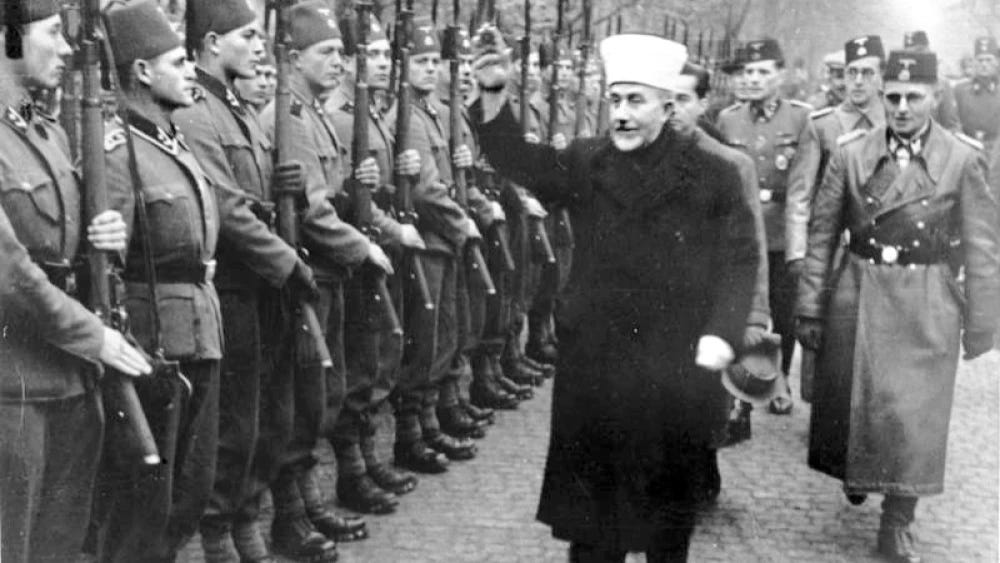
Long before algorithmically curated slogans dominated public discourse, the founding father of the Palestinian cause, Hajj Amin al-Husseini, made a deliberate, operational choice: he aligned his political campaign directly with Nazi Germany. Yet today, his name is almost never spoken by the very movement he built. He was erased not because he was irrelevant, but because his true history spoils the modern story.
Before modern social media condensed complex regional politics into simple slogans, Hajj Amin al-Husseini’s political ambitions looked drastically different.
In the immediate aftermath of World War I (around 1919–1920), al-Husseini did not advocate for an independent, sovereign Palestinian state within the territorial definitions recognized today. Instead, his early efforts were rooted in pan-Arab nationalism aimed at establishing Greater Syria (Bilad al-Sham), centered in Damascus.
The historical geographical scope of Greater Syria comprised:
. Modern-day Syria
. Lebanon
. Jordan
. Israel, the West Bank, and the Gaza Strip (Mandatory Palestine)
. Portions of southern Turkey (specifically the Hatay province)
When the British and French partitioned the Middle East into Mandates under the Sykes-Picot framework, the vision of a unified Greater Syria collapsed. Following his appointment as the Grand Mufti of Jerusalem by the British High Commissioner in 1921, al-Husseini shifted his focus entirely to Mandatory Palestine, consolidating his control as head of the Supreme Muslim Council and later the Arab Higher Committee.
Throughout the 1920s and 1930s, al-Husseini organized violent anti-British and anti-Jewish revolts across the region. Fleeing Palestine in 1937 to evade British arrest, his opposition to Britain and Zionism led him directly into an operational partnership with Axis Europe.
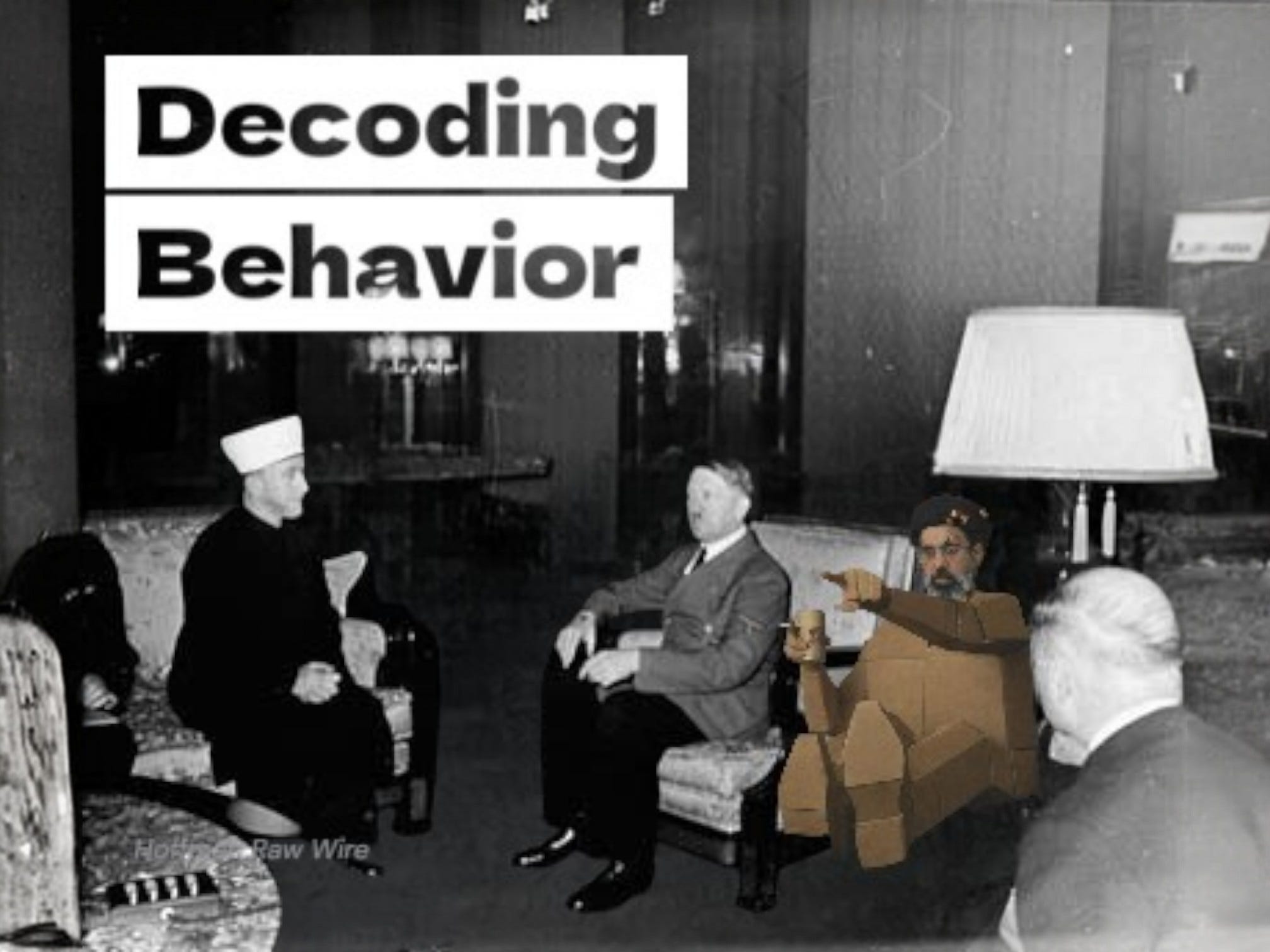
In November 1941, al-Husseini met personally with Adolf Hitler in Berlin. The meeting highlighted the sheer hypocrisy of Nazi racial dogma: Hitler, obsessed with Aryan racial purity and viewing non-Europeans as racially inferior, conveniently shelved his own core ideology to forge an alliance of geopolitical convenience. Al-Husseini, equally willing to ignore Nazi racial theories that classified Arabs as inferior, sought formal Axis backing to destroy the Jewish national home in Palestine and secure Arab independence under Nazi protection.
Bankrolled by the Nazi regime with offices and a monthly stipend, al-Husseini spent the remainder of World War II in Axis-controlled territory:
. Producing anti-Allied and pro-Axis radio broadcasts beamed directly to the Middle East.
. Actively recruiting European Muslims into the Waffen-SS, directly aiding in the formation of the 13th Mountain Waffen-SS Division Handschar in Bosnia.
. Working closely with Nazi leadership to ensure Axis support for his regional political goals.
Following the collapse of Nazi Germany in 1945, al-Husseini fled to Switzerland, was detained in France, and eventually escaped to Egypt.
By the onset of the 1948 Arab-Israeli War, his strategic gamble had proved to be a catastrophic failure. Mainstream Arab leaders deeply distrusted his wartime alignment with Berlin and sidelined him from diplomatic and military operations. King Abdullah I of Jordan officially stripped him of his authority over Jerusalem’s holy sites.
Because his alliance with Hitler was a total diplomatic and political failure, subsequent Palestinian political movements systematically dropped him from their mainstream narrative. Modern leaders and public figures almost never mention his name, effectively removing the primary leader of the early movement from popular history.
Hajj Amin al-Husseini died in relative obscurity in Beirut in 1974, having failed to achieve any of his territorial or political goals—leaving behind a legacy that modern scroll-culture has completely forgotten.