

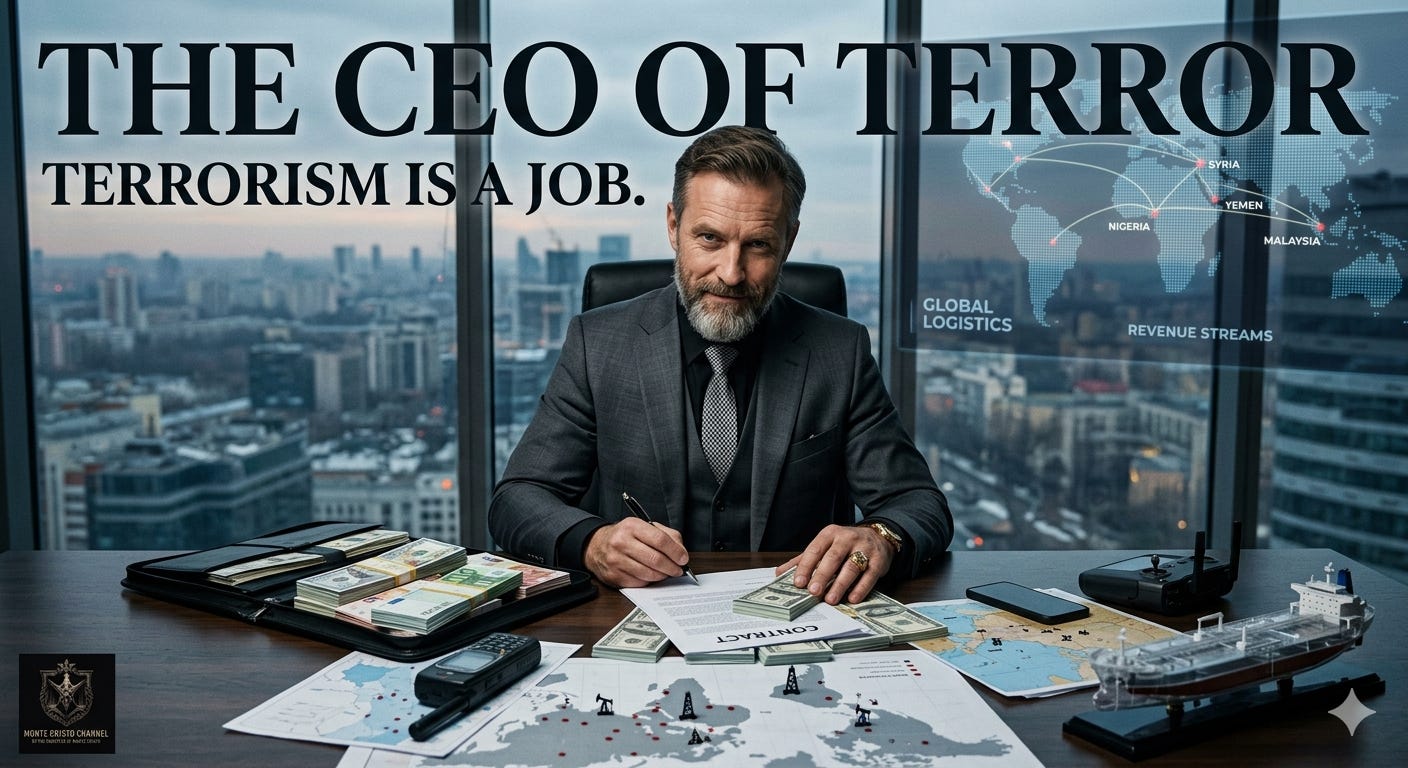
The lines between religious insurgency and organized crime have not just blurred; they have vanished. In 2026, the global map of “holy wars” is actually a map of lucrative trade routes, gold mines, and ransom markets. While the rhetoric remains filled with divine mission, the ledgers tell a story of cold, hard cash. Terrorism is no longer a calling; it is a high-paying job.
The African Ransom Cartels
In the Sahel and the Lake Chad Basin, groups like Boko Haram and JNIM have industrialized kidnapping. In Nigeria, Boko Haram has transitioned from a mission of “cleansing” education to a venture capital model of abduction. They target the most vulnerable—children—to extract “huge” ransom payments from the state and international entities. Reports from February 2026 indicate that JNIM’s coffers were recently swollen by a single ransom payment of approximately $50 million. In 2025 alone, these “donations” in the region reached millions, proving that a child’s life is now a more stable currency than any local legal tender.
The Capture of the State: Lebanon and Yemen
Entire nations are now being hoodwinked and blackmailed by groups that have effectively hijacked the state apparatus. In Lebanon, Hezbollah operates as a “state within a state,” holding the national economy hostage to its own strategic and financial needs. Similarly, the Houthis in Yemen have established a de facto government that survives through the systematic extortion of international shipping and local commerce. These groups are not “governing”; they are running a protection racket on a national scale, paralyzing legitimate state functions to serve their own survival.
The Proxy Paradox: Hamas and the IRGC
The illusion of ideological solidarity is most visible in the relationship between the Iranian Revolutionary Guard Corps (IRGC) and its proxies. Groups like Hamas in Gaza have received billions in funding under the guise of a shared revolutionary mission. However, when the IRGC required a full-scale contribution to the broader war effort, these groups contributed remarkably little. It has become clear that while the IRGC pays the bills, the proxies are often more interested in maintaining their local “business” and power structures than in fulfilling a grand ideological mandate.
The Middle Eastern “Narco-Jihad”
In the Levant and Iraq, the facade of ideological struggle covers a massive smuggling operation. The production of Captagon has created a shadow economy worth an estimated $10 billion. While these groups claim to be defenders of faith, they function as the logistical backbone for a drug trade that fuels addiction across the Gulf. In Iraq, militias have seized control of state-funded construction contracts and subsidized fuel routes. By early 2026, the “resistance” is clearly a protection racket for illicit trade.
The Maritime Bandits of Southeast Asia
In the Philippines, the Abu Sayyaf Group (ASG) provides a study in the “crime-terror” nexus. While claiming to fight for an independent Islamic state, the group functions as a kidnapping-for-ransom syndicate. Local intelligence in 2026 confirms that for most members, financial reward is the primary driver. ASG’s survival depends on a “business” model where 90% of their funding is generated by abducting businessmen and tourists.
The Narco-Insurgents of Central Asia
In Pakistan and Central Asia, the TTP and the BLA use the language of Sharia or separatism to run protection rackets. In Balochistan, mining operations are forced to pay “per ton” extortion fees to separatist militants. If the “tax” isn’t paid, equipment is torched and workers are abducted. These groups operate as shadow governments, targeting infrastructure projects to ensure the group’s payroll remains funded.
The Retention of the Rank and File
Ideology is the hook for recruitment, but money is the tool for retention. In regions with zero economic opportunity, these groups offer salaries that the state cannot match. ISWAP in West Africa now governs up to 3 million civilians, collecting taxes on fish and crops to generate an estimated $191 million annually. The tragedy of 2026 is that as long as terror remains this profitable, no amount of counter-ideology will stop it.
Sources & Intel:
United Nations Security Council Report S/2026/44 (February 2026)
UNODC Module 16: Kidnapping for Ransom and Terrorism (March 2026 Update)
Geopol Report: The Evolution of the Captagon Trade (February 2026)
Arab News: Balochistan Mining Extortion Hearings (March 2026)
AFP Western Mindanao Command: Status of ASG Operations (April 2026)
Middle East Institute: Militia Economics in Post-Conflict Iraq (January 2026)
International Crisis Group: The Lebanon-Hezbollah Standoff (March 2026)