

The 20th-century coal miner lived in a world of "Hard Power." He loaded sixteen tons of coal, was paid in corporate scrip, and spent his earnings at the Company Store. The trap was physical and undeniable. Today, the extraction hasn't stopped; it has simply evolved into a more efficient, invisible "Machine of Air." We have traded the iron-fisted suppression of the Pinkertons for a sophisticated, data-driven architecture designed to devalue your labor while rebranding serfdom as "membership."
The Historical Pivot: From Clubs to Algorithms
In the old world, corporations used physical violence to prevent workers from organizing. When that became a PR liability, they allowed the Mob to infiltrate unions, creating a convenient pretext for the federal government to use RICO statutes to dismantle collective bargaining. By the time the dust settled, the organic union—the only capitalist tool for labor price discovery—was a hollow shell.
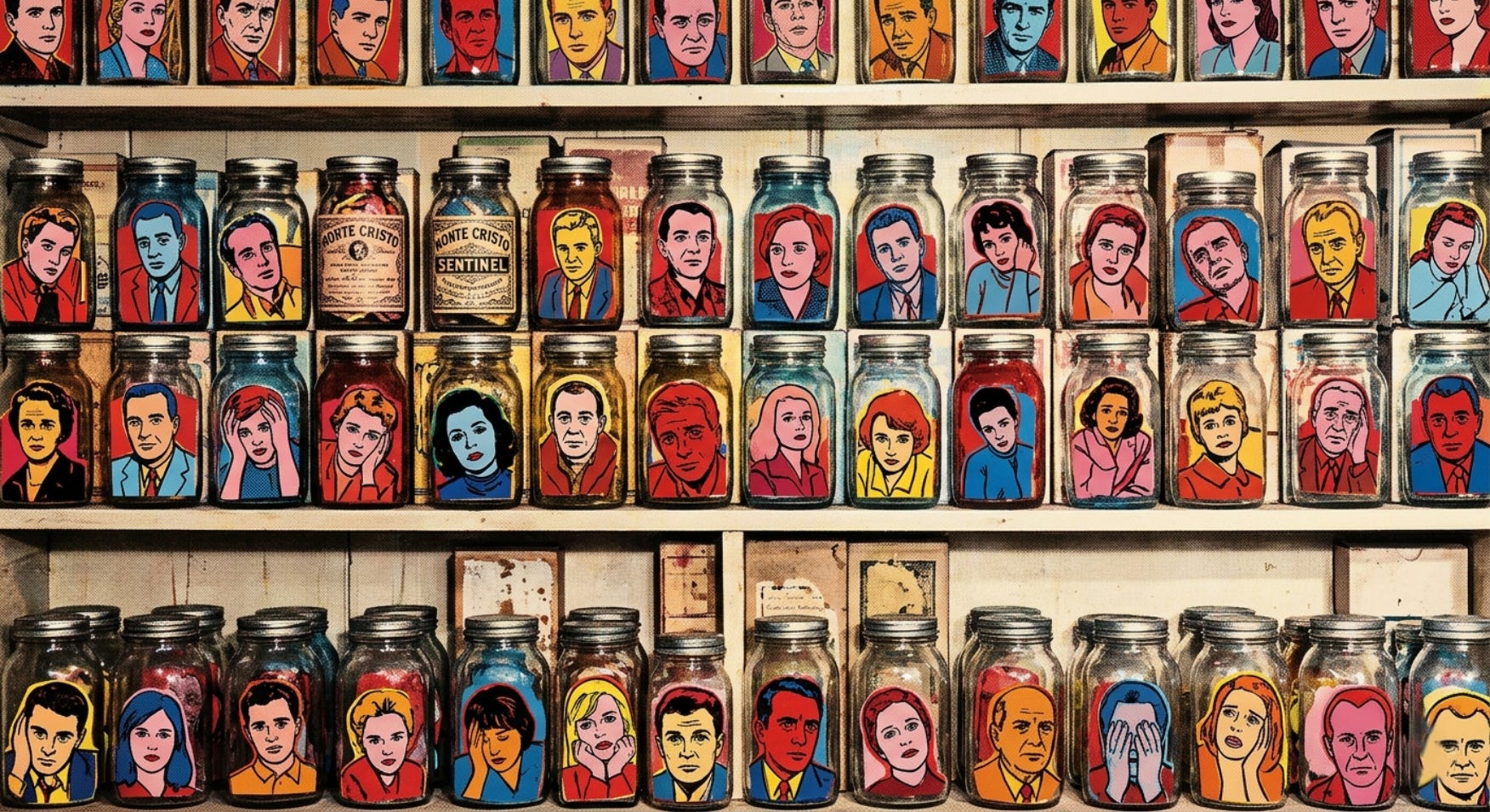
With the professional union broken, corporations filled the vacuum with fake structures. They created "Loyalty Programs" and "Member Circles." These are not perks; they are the modern equivalent of the Company Store. You pay an annual subscription fee for the "privilege" of giving them your behavior. This data is then fed into Surveillance Pricing models—an algorithmic tactic where prices are hiked in real-time based on your individual "pain point." Data from Vanderbilt and UC Berkeley (2025) indicates that these algorithms can identify the exact moment a consumer is most desperate, allowing the "Machine of Air" to extract maximum equity from every transaction.
The Culture Hack: Fragmentation as a Service
The most effective way to kill a union is to ensure the workers never form a collective identity. At the Sentinel, we follow behavior, and the behavior is clear: corporations are weaponizing pre-existing social hierarchies to police their own workforce.
Leaked internal documents have confirmed the use of "Diversity Heat Maps" to track stores at risk of unionization. While the public-facing brand celebrates "inclusion," the internal strategy uses cultural silos—clustering workers from specific ethnic backgrounds or rigid social hierarchies, such as the Indian caste system—to ensure organic unity is impossible. If the workforce is fragmented by design, the company doesn't have to hire a union-buster; the culture does the policing for them. This is the "Union of Air"—a structure that looks like community but functions as a cage.
The Capitalist Math: The Cost of Isolation
This is not an ideological debate; it is a matter of market leverage. If you are a capitalist, you must look at the market value of your labor as a product. When you sell that product individually, you are at a massive disadvantage against a corporate monopsony. The numbers corroborated by the Bureau of Labor Statistics (BLS) and the Economic Policy Institute (EPI) are devastating:
The Salary Gap: As of early 2026, the median weekly earnings for union workers stand at $1,404, compared to $1,174 for non-union workers. By remaining unorganized, you are paying a 16% "isolation tax" directly to your employer's bottom line every single week.
The Wealth Multiplier: Data from the Center for Economic and Policy Research shows a union household holds a median wealth of $338,482, while a non-union household holds only $199,948. That is a 1.7x wealth multiplier that vanishes the moment you buy into the "independent contractor" or "consultant" myth.
The Extraction Ratio: In 1965, when union density was at its peak, the CEO-to-worker pay ratio was 20-to-1. Today, in the era of the "Machine of Air," it has exploded to over 344-to-1. That capital didn't disappear; it was transferred from the factory floor to the C-suite because the individual worker has zero leverage against the algorithm.
The Final Verdict
The Monte Cristo Sentinel does not deal in "isms." We are not here to sell you an ideology or a political movement. Our protocol is simple: we follow the numbers and we analyze behavior. When the data shows a 16% salary gap and a 1.7x wealth multiplier, it isn't a "socialist" talking point—it is a market reality.
The patterns we have uncovered reveal a singular truth: the corporation is merely a subsidiary of human behavior. It seeks the path of least resistance to the highest possible profit. If that path requires rebranding a pyramid scheme as a "partnership" or using cultural hierarchies to keep labor costs low, the machine will do it every time.
Your task isn't to stay away from corporations. We don't care about the corporations. Your task is to get your money back. For decades, corporations have successfully hedged your money, using your data and your lack of organization to lock in their own gains at your expense. They have hedged against your labor, your time, and your future.
Conserve your capital, make more of it, and start acting like the entities you're dealing with. Stop looking at the labels and start looking at the mechanics. Every "membership" is a leak in your bucket. Every "independent consultancy" is a transfer of risk that belongs to them, not you. They have built a fake version of collective power to keep you isolated and leaking capital.
The question isn't about your politics. It is about your equity. If you don't own the structure you work within, you are just an asset being managed by an algorithm. Stop letting them hedge you. It is time for you to find and devise ways to hedge them. Take back your capital. Look at the patterns, calculate the cost, and put the money back where it belongs: in your hands.