

Turn on the news on any given night, and you will hear the same talking points from every cable TV pundit and military analyst. They talk about NATO borders, weapon shipments to Ukraine, European energy costs, and the latest unhinged nuclear threats coming out of Moscow. Every time a Kremlin mouthpiece like Dmitry Medvedev pops up on TV rattling the nuclear saber, Western commentators freak out. They spend hours debating "Putin’s red lines" and whether the West is pushing Russia too far. What you almost never hear any talking head on a microphone say is the simple truth: Russia is making all that noise at the West because it is terrified of China.
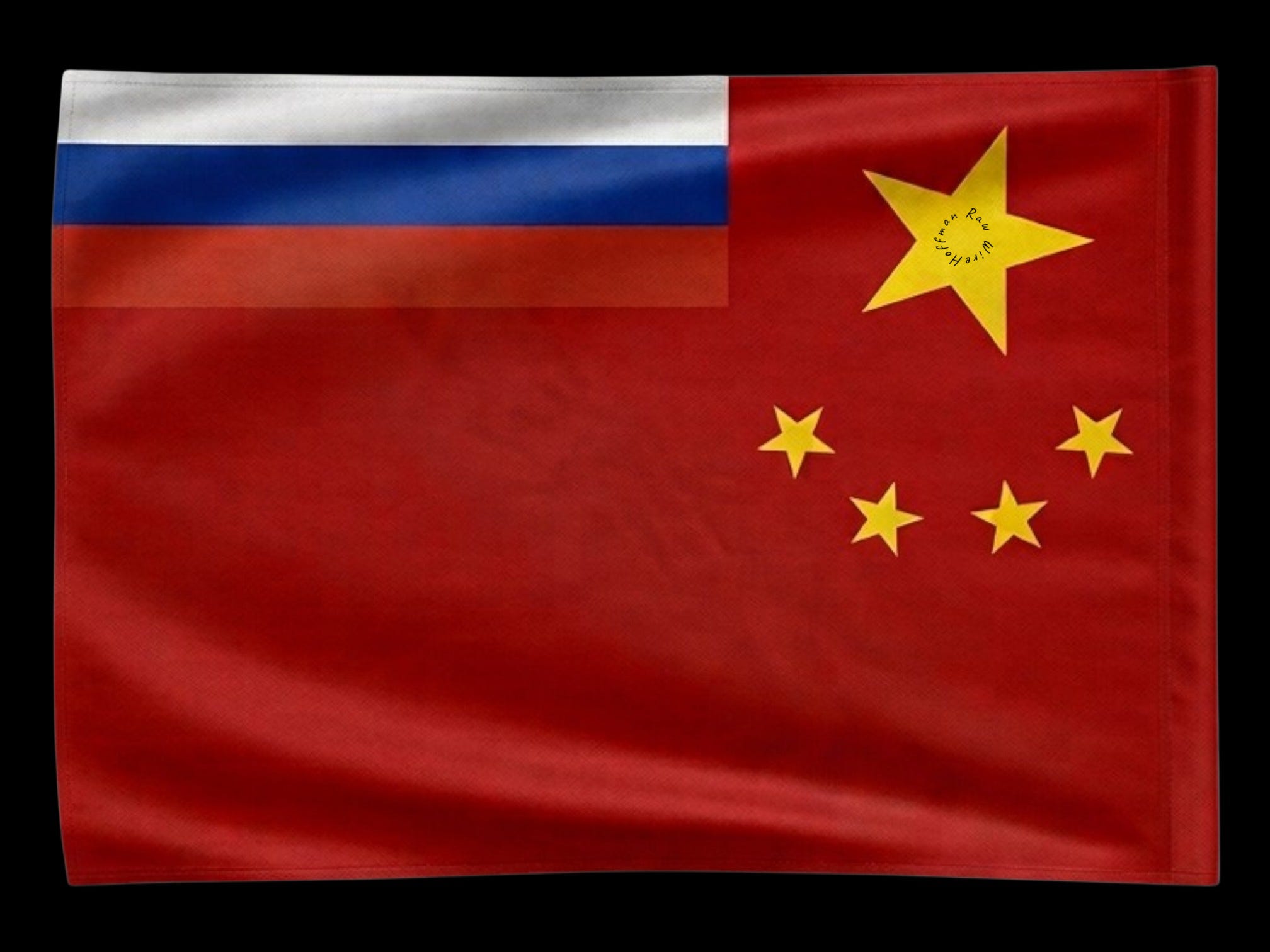
Moscow’s whole anti-Western routine is a massive distraction. While the Kremlin burns its money, its weapons, and an entire generation of young men fighting over patches of land in Eastern Europe, it is handing its actual future—Siberia and its massive natural resources—to Beijing on a silver platter. China doesn't need to fire a single missile to conquer Russia. It just has to sit back, supply Russia's military, and bleed the country dry for the next 50 years.
Mainstream media loves a simple narrative: the US and Europe on one side, and a strong, unified "Russia-China alliance" on the other. That narrative is completely wrong. As Alexander Gabuev, Director of the Carnegie Russia Eurasia Center, has repeatedly pointed out, this is not an equal partnership—it is a functional "vassalage." China is not Russia’s partner; China is Russia’s landlord, creditor, and armorer.
Why does Moscow constantly threaten the West with nuclear weapons? Because nuclear talk is the only tool they have left to trick the world into thinking Russia is still a real superpower. Renowned historian Stephen Kotkin calls this Russia's classic historical trap: a country that desperately wants to project power globally, but lacks the domestic economy, population, or technology to sustain that status naturally. To bridge that gap, Moscow relies on military threats and bluster to mask its internal weakness. In the real world, Russia’s conventional military is getting chewed up, its industrial base relies on foreign parts, and its economy is smaller than the state of Texas. Russian leaders know they can't match Western production, and they know they can't match China's population or economic power. So they grab the nuclear megaphone and scream at NATO to look tough, while quietly letting Beijing strip their country from behind.
This dependence goes way beyond civilian trade. China is the primary reason Russia can even keep fighting in Ukraine. Western intelligence and State Department reports confirm that Russian factories cannot produce modern military hardware without Chinese supply chains. China supplies roughly 90% of Russia's dual-use microelectronics—the critical components required to build Russian cruise missiles, drones, and armored vehicles. Over 70% of high-precision CNC machine tools imported by Russian defense contractors come directly from Chinese manufacturers, keeping Russian tank and artillery production lines running. Furthermore, Chinese firms provide vast quantities of nitrocellulose and chemical precursors essential for Russia's domestic gunpowder and artillery shell manufacturing. Without Beijing keeping the supply lines open, Russia’s military industry would stall out within months. Moscow is in a position where it must beg its ultimate strategic rival for the raw materials required to fight a war in Western Europe.
The broader economic data proves just how fast Russia is being structurally absorbed. After losing European buyers, Russia had no choice but to sell its oil and gas to China at massive discounts. Over four years alone, those forced discounts cost the Russian oil industry roughly $12 billion in lost revenue according to calculations from the Gaidar Institute. China now gets cheap Russian energy overland, totally safe from Western navy blockades. At the same time, the Yuan has taken over: before 2022, less than 2% of Russia's trade was done in Chinese currency, whereas today that number sits around 30% to 40%, practically tethering the Russian Ruble to Beijing’s financial system. Russia has fallen into pure resource colony economics. Over 70% of what Russia sells to China is raw, unrefined stuff like crude oil, coal, gas, and timber. In return, Russia imports finished, high-value goods like cars, heavy machinery, microchips, and factory equipment.
Look at a map and do the basic math. As geopolitical analyst Tim Marshall notes in Prisoners of Geography, Russia's core insecurity has always been geographical depth. Siberia and the Russian Far East hold almost all of Russia’s oil, gas, timber, gold, and freshwater. But only about 20 million Russians live across that entire, massive expanse. Right across the border in China, over 100 million people live in the northeastern provinces, backed by an economy nearly ten times bigger than Russia’s. To fight its war in Europe, Moscow took its armored divisions, air defense units, and troops directly off its eastern border with China and shipped them west. Moscow literally disarmed its own back door—the exact border it spent centuries fortifying against Asian powers. China doesn't need an army to take over Siberia. They are doing it with supply contracts, currency conversion, defense leverage, and demographic weight.
This is not the first time a declining empire has walked into this exact trap. History offers a clear preview in the fall of the Ottoman Empire. In its final decades, the "Sick Man of Europe" remained obsessed with fighting its traditional European rivals along its western and northern frontiers, burning its treasury and military strength to project an image of power. While Constantinople fixated on Europe, it lost control of its economy to foreign creditors through forced trade concessions and debt administrations, turning the empire into a financial colony long before it officially collapsed. Modern Russia is executing the exact same maneuver: using military bluster and anti-Western rhetoric to mask structural decay, while quietly handing its economic sovereignty and natural resources to a quiet predator waiting in the east.
Russian leaders aren't stupid. Deep down, they know China is their real long-term existential threat. But they backed themselves into a corner where they can never admit it out loud. Admitting that China is the predator would mean admitting two terrible facts: first, that they started a war in Europe that destroyed their own economic and military independence, and second, that they are completely dependent on Beijing just to keep their army supplied on the battlefield.
So the show continues on television. Kremlin surrogates will keep screaming about nuclear strikes on European capitals, and Western commentators will keep falling for it every single night. Meanwhile, Beijing will just keep sitting back, selling Russia the chips and tools to fight NATO, buying cheap Siberian oil, and slowly turning Russia into a subsidiary of the Chinese empire for the next half-century.